ABFER Welcome Dinner
Keynote Speech by Professor Viral Acharya
The Convenience Yield of US Treasuries: Can we take it for granted?
The convenience yield of U.S. Treasuries exhibits properties consistent with a hedging perspective of safe assets; i.e., Treasuries are valued highly if they appreciate with poor aggregate shocks. In particular, the convenience yield tends to be low when the covariance of Treasury returns with the aggregate stock market returns is high. A decomposition of the aggregate stock-bond covariance into terms corresponding to the convenience yield, the frictionless risk-free rate, and default risk reveals that the covariance between stock returns and the convenience yield itself drives the effect in a substantive capacity. This evidence over past several decades helps explain how the “Tariff War” shock of April 2025 affected the safe-asset status of US Treasuries. Convenience yield erosion for long bonds is consistent with a reduction in the hedging property, reflected in a rising stock-bond covariance. Decomposing (again) the Treasury yield into risk-free rate, credit spread, and convenience yield components reveals that covariance due to the convenience yield component increased for long bonds. The short end of the Treasury curve, however, continued to exhibit the safe-asset hedging property. These effects are consistent with a withdrawal of safe-asset investors and a rotation towards shorter-term Treasuries and gold.
2026
Conrad Singapore Orchard, 1 Cuscaden Rd, Singapore 249715
“The Convenience Yield of US Treasuries: Can we take it for granted?”
Speakers
-
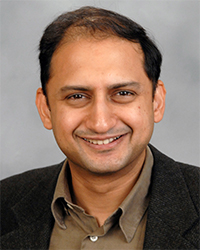
Professor Viral ACHARYA
C.V. Starr Professor of Economics in the Department of Finance, Stern School of Business, New York University and Senior Fellow, ABFER
Viral Acharya is the C.V. Starr Professor of Economics in the Department of Finance at New York University Stern School of Business (NYU-Stern). He was a Deputy Governor at the Reserve Bank of India (RBI) during January 2017 to 23rd July 2019 in charge of Monetary Policy, Financial Markets, Financial Stability, and Research. He is a Research Associate of the National Bureau of Economic Research (NBER) in Corporate Finance and International Finance and Macroeconomics, a Research Affiliate at the Center for Economic Policy Research (CEPR), and Research Associate of the European Corporate Governance Institute (ECGI). He is a member of the Bundesbank Research Council since January 2025 and an invited member of the Bellagio Group of academics and policy-makers from central banks and finance ministries since 2021.
He is or has been an Academic Advisor to the Federal Reserve Banks of Chicago, Cleveland, Kansas City, New York and Philadelphia, and the Board of Governors, and has provided Academic Expert service to the Bank for International Settlements, the International Monetary Fund and the World Bank. He was a member of the Climate-related Financial Risk Advisory Committee (CFRAC) of the Financial Stability Oversight Council for 2023-26, a Scientific Advisor to the Sveriges Riksbank (February 2024-January 2026), and also a member of the Financial Advisory Roundtable (FAR) of the Federal Reserve Bank of New York for 2020-25.
His primary research interest is in theoretical and empirical analysis of systemic risk of the financial sector, its regulation and its genesis in government- and policy-induced distortions, an inquiry that cuts across several other strands of research – credit risk and liquidity risk, their interactions and agency-theoretic foundations, as well as their general equilibrium consequences. In recent work, he has also studied inflation uncertainty and the impact of pandemic and climate-change related risks. -
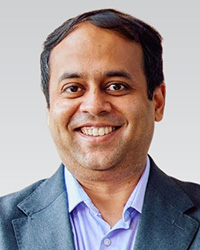
Associate Professor Shashwat ALOK
Associate Professor of Finance, Indian School of Business and Fellow, ABFER
Shashwat Alok is an Associate Professor of Finance at the Indian School of Business (ISB). He joined ISB in 2013 after receiving his PhD in Finance from the Olin Business School, Washington University in St. Louis. He is currently the Research Director at the Digital Identity Research Initiative.
His primary research interests are in the areas of corporate finance. In particular, his research focuses on understanding the impact of the law, government policy, and institutions on firms and individual behaviour, with a greater focus on emerging markets. His recent work seeks to examine the role of alternative data and fintech in expanding financial inclusion, and the impact of climate change on firms and capital allocation.
Professor Alok is the recipient of multiple prestigious grants, and his work has been accepted at leading international conferences such as those hosted by the American Finance Association, the Asian Bureau of Finance and Economic Research, the European Finance Association, and the Financial Intermediation Research Society. His research has been published or accepted in top academic journals such as the Review of Financial Studies, Management Science, and the Journal of Financial and Quantitative Analysis. Prof Alok's research has been cited by the Indian Economic Survey (2018-2019) and the Reserve Bank of India's Household Finance Committee Report (2017). His research has also featured in major Indian media outlets, including the Economic Times and the Times of India.
Before joining the PhD programme, he graduated among the top of his class in Computer Science and Engineering from the Manipal University. He was the recipient of the Hubert C. Moog Scholar for academic excellence while pursuing his PhD at the Washington University in St Louis.
- 1
Session Format
40 minutes of keynote speech and 20 minutes for Q&A.
Supported by