13th Annual Conference
Academic Luncheon Keynote by Professor Valerie Ramey
The Micro and Macro Effects of Government Household Transfers
Cash transfers to households have become a widely used tool of government policy both as a short-term stimulus during recessions and as ongoing income support to low-income households. This talk discusses the evidence on the aggregate effects of these types of programs. Recent work has found that the household marginal propensity to consume out of temporary transfers is typically lower than previously thought. Moreover, partial and general equilibrium forces, such as responses of relative prices and open economy considerations, further mute the aggregate stimulus effects of temporary transfers. Case studies of prominent transfers suggest very little macroeconomic stimulus. On the other hand, permanent or persistent cash transfers might generate a higher marginal propensity to consume if households are not Ricardian. A question with permanent transfers, though, is the effect on labor supply. Some recent papers have estimated sizeable negative marginal propensities to earn out of unearned income, i.e., households reduce their labor supply in response to rises in unearned income. If this channel is strong enough, persistent cash transfers can depress rather than stimulate the macroeconomy.
2026
Conrad Singapore Orchard, 1 Cuscaden Rd, Singapore 249715
"The Micro and Macro Effects of Government Household Transfers"
Speakers
-
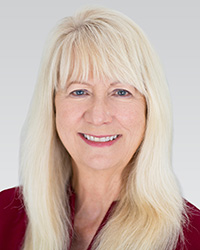
Professor Valerie RAMEY
Thomas Sowell Senior Fellow, Hoover Institution, Stanford University
Valerie Ramey is the Thomas Sowell Senior Fellow at the Hoover Institution. She is also a Research Associate of the National Bureau of Economic Research, a Research Fellow of the Centre for Economic Policy and Research, a member of the American Academy of Arts and Sciences, and a Fellow of the Econometric Society. She has served as co-editor of the American Economic Review and as a member of several National Science Foundation Advisory Panels and the Federal Economic Statistics Advisory Committee. She currently serves on the Panel of Economic Advisers for the Congressional Budget Office and is chair of the NBER Business Cycle Dating Committee. She is a co-editor of the NBER Macro Annual.
Ramey has published numerous scholarly articles and policy-relevant articles on macroeconomic topics such as the sources of business cycles, the effects of monetary and fiscal policy, the effects oil price shocks, and the impact of volatility on growth. She has also written numerous articles on trends in wage inequality and trends in time use, such as the increase in time investments in children by educated parents. Her work has been featured in major media, such as the Wall Street Journal and the New York Times. -
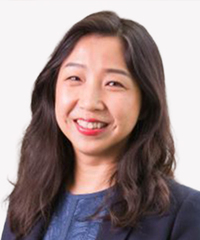
Professor Wenlan QIAN
Professor of Finance and Real Estate and Ng Teng Fong Chair Professor in Real Estate, NUS Business School, National University of Singapore and Fellow, ABFER
Wenlan QIAN is Professor of Finance and Real Estate and Ng Teng Fong Chair Professor in Real Estate at the NUS Business School, and director of the Institute of Real Estate and Urban Studies at the National University of Singapore. She is fellow of the Asian Bureau of Finance and Economics Research, Luohan Academy at Alibaba Group, and the Homer Hoyt Weimer School of Advanced Studies in Real Estate and Land Economics.
Wenlan Qian's main research interests are household finance, real estate, digitization and FinTech, and financial intermediaries. Her research is accepted for publication at top academic journals such as American Economic Review, Journal of Financial Economics, Review of Financial Studies, Review of Economics and Statistics, American Economic Journal: Economic Policy, Management Science, Real Estate Economics, Journal of Financial and Quantitative Analysis, and Review of Finance. She is also the recipient of multiple prestigious external grants.
Wenlan Qian holds a PhD in Business Administration from the Haas School of Business, University of California, Berkeley.
- 1
Session Format
30 minutes of keynote speech and 20 minutes for Q&A.