Joint Dinner for ABFER and AMPF
Keynote Speech by Professor Michael Spence
The Global Economy in Multiple Complex Transitions
As the global economy emerged from the Covid pandemic, rapid structural shifts started to emerge and accelerate, in response to shocks and secular headwinds and national and economic security concerns. Rapid diversification of supply chains and target markets followed. The second Trump administration’s policies reinforced some of these trends. Its withdrawal from multilateral institutions raised new governance issues. But global economy adapted, while evolving structurally, and has proved remarkably resilient.
Davos 2026 was to some extent preoccupied with these issues. But interest also gravitated to revolutions in science and technology enabled by the growing power of Artificial Intelligence, the multiple dimensions of AI impact, with some focus on what is needed to realize its full potential. While the frontier models and research are mainly in located in China and the USA thus far, the deployment of a growing, powerful AI tool set is open to entire global economy, a fact that is is perhaps not widely understood. AI’s impact in science, on productivity and growth potential, the diffusion challenge, potential investment and valuation bubbles, AI in national security and defense, automation and machine human collaboration, AI enabled inclusive growth patterns, and progress in robotics, will be part of the conversation.
2026
Conrad Singapore Orchard, 1 Cuscaden Rd, Singapore 249715
"The Global Economy in Multiple Complex Transitions"
Q&A Session
Chair: Professor Steven J. DAVIS
Thomas W. and Susan B. Ford Senior Fellow and Director of Research, Hoover Institution; Senior Fellow, Stanford Institute for Economic Policy Research; William H. Abbott Distinguished Service Professor Emeritus, University of Chicago Booth School of Business, and Exco Member, ABFER
Speakers
-
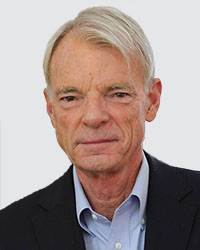
Professor Michael SPENCE
Recipient of the 2001 Nobel Memorial Prize in Economic Sciences; Philip H. Knight Professor and Dean, Emeritus, Stanford Graduate School of Business, Stanford University
Michael Spence is the Philip H. Knight Professor Emeritus of Management in the Graduate School of Business at Stanford University, a Senior Fellow of the Hoover Institution at Stanford and a Distinguished Visiting Fellow of the Council on Foreign Relations. He is an Senior Professor at Bocconi University in Milan, and an Honorary Fellow of Magdalen College, Oxford University, and a Distinguished Academic Visitor at Queens’ College, Cambridge.
In 2001, he received the Nobel Prize in Economic Sciences for his work in the field of information economics.
He is the author of “The Next Convergence: The Future of Economic Growth in a Multispeed World,” Farrar, Straus and Giroux (May 10, 2011). His new book, written with Gordon Brown, Mohamed El-Erian and Reid Lidow is “Permacrisis: How to Fix a Fractured World,” Simon and Schuster, Sept 2023.
He is a Senior Advisor to Jasper Ridge Partners and a Senior Advisor to General Atlantic Partners. He chairs the Advisory Boards of the Asia Global Institute and the MBZ University of Artificial Intelligence. He was the Chairman of The Independent Commission on Growth and Development (2006-2010). He is a member of the Advisory Councils of the Luohan Academy in Hangzhou and the Digital Economy Lab at Stanford. He served as Dean of the Stanford Business School from 1990 to 1999 and Dean of the Faculty of Arts and Sciences at Harvard University from 1984 to 1990.
He was awarded the John Kenneth Galbraith Prize for excellence in teaching and the John Bates Clark Medal, awarded to American economists under age 40 for a "significant contribution to economic thought and knowledge."
From 1984 to 1990, Spence served as the dean of the Faculty of Arts and Sciences at Harvard, overseeing Harvard College, the Graduate School of Arts and Sciences, and the Division of Continuing Education.
From 1977 to 1979, he was a member of the Economics Advisory Panel of the National Science Foundation and in 1979 served as a member of the Sloan Foundation Economics Advisory Committee. At various times, he has served as a member of the editorial boards of American Economics Review, Bell Journal of Economics, Journal of Economic Theory, and Public Policy. -
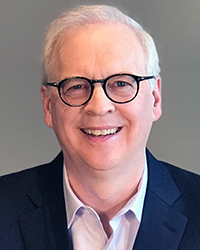
Professor Steven J. DAVIS
Thomas W. and Susan B. Ford Senior Fellow and Director of Research, Hoover Institution; Senior Fellow, Stanford Institute for Economic Policy Research; William H. Abbott Distinguished Service Professor Emeritus, University of Chicago Booth School of Business, and Exco Member, ABFER
Steven Davis studies working arrangements, business dynamics, economic fluctuations, policy uncertainty and other topics. His research appears in the American Economic Review, Journal of Political Economy, Quarterly Journal of Economics and other leading scholarly journals. He hosts Economics, Applied – a video podcast series sponsored by the Hoover Institution.
Davis is also a research associate of the National Bureau of Economic Research, IZA research fellow, senior academic fellow with the Asian Bureau of Finance and Economics Research, adviser to the Monetary Authority of Singapore, visiting scholar at the Federal Reserve Bank of Atlanta, senior adviser to the Brookings Papers on Economic Activity, and an elected fellow of the Society of Labor Economists. He was on the faculty at the University of Chicago Booth School of Business for more than 35 years, including service as a chaired professor and as deputy dean of the faculty.
Davis is a co-creator of the Economic Policy Uncertainty Indices, the Survey of Business Uncertainty, the U.S. Survey of Working Arrangements and Attitudes, the Global Survey of Working Arrangements, the Work-from-Home Map project, and the Stock Market Jumps project. He cofounded and co-organizes the Asian Monetary Policy Forum, held annually in Singapore. He has received research grants from the Alfred P. Sloan Foundation, Ewing Marion Kauffmann Foundation, Templeton Foundation, John D. and Catherine T. MacArthur Foundation, U.S. National Science Foundation, and other organizations. In 2012, he was awarded the Addington Prize in Measurement for “Measuring Economic Policy Uncertainty.”
His teaching experience includes Ph.D. courses in macroeconomics and labor economics at the University of Chicago, the Massachusetts Institute of Technology, and the University of Maryland; MBA courses in macroeconomics, money and banking, business strategy, and financial institutions for Chicago Booth; and executive MBA courses in macroeconomics for Chicago Booth in Barcelona, Hong Kong, London, and Singapore. Davis has also taught undergraduate courses in microeconomics, econometrics, and money and banking at Brown University and the Massachusetts Institute of Technology.
Davis has served as an expert in many litigation matters. In the antitrust area, he has testified and consulted on market definition, dominance, competitive relationships, exclusionary practices, price discrimination, and collusive conduct. In mortgage lending and consumer finance, he has testified and consulted on class certification, liability, and damages. He has also offered testimony and analysis of damages in breach of contract and credit market discrimination. Past engagements include matters pertaining to auto loans and leases, containerboard and corrugated products, microprocessors, mortgage loans, pharmaceuticals, software products and markets, specialty grocery products, trade shows, viatical and life settlements, and workers’ compensation insurance. Outside of litigation matters, he has consulted on labor market developments, the macroeconomic outlook, capital planning in a large financial institution, and the use of text-based methods to quantify tax reform likelihoods.
Davis has written for the Atlantic, Financial Times, Forbes, Harvard Business Review, Los Angeles Times, Time, Wall Street Journal and other media. He has appeared on BBC, Bloomberg TV, CBS, CGTN, Channel News Asia, CNBC, CNN, Fox News, NBC Network News, Sinclair Broadcast Group, and the U.S. Public Broadcasting System, among others.
- 1
Organizers
